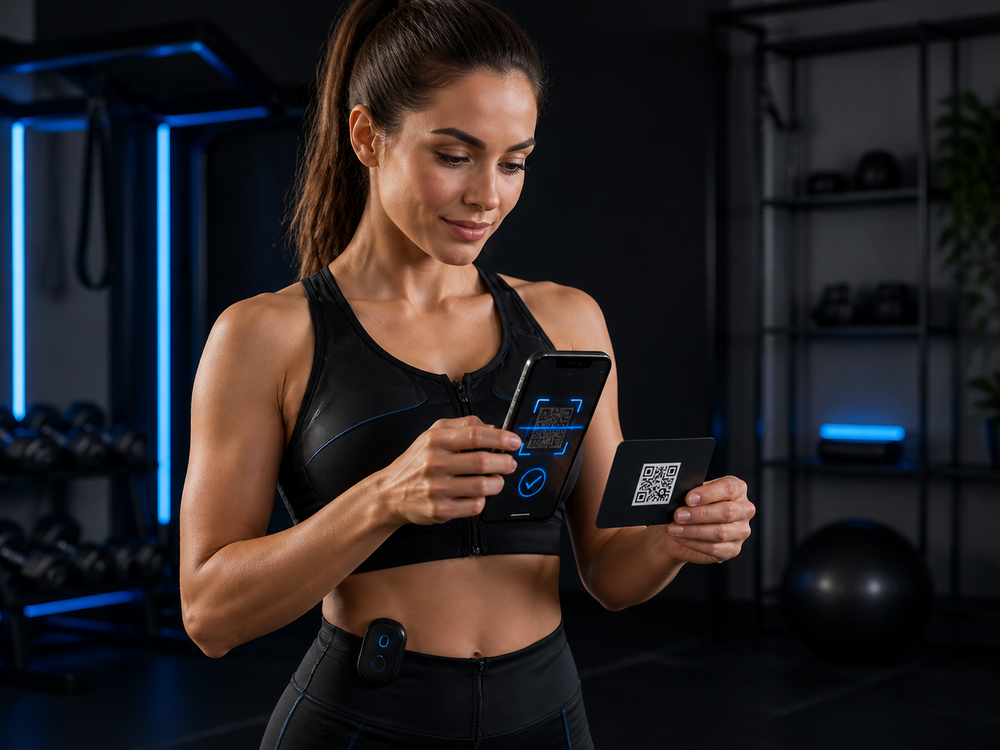
STEP 01
Scan and Connect
Scan the QR code included with your product to access your complimentary AI Coach and product guidance.

COMPLIMENTARY AI GUIDANCE
Scan the QR code supplied with your product for setup, fit, electrode contact and basic product-use guidance.
GET STARTED
Always read the product manual and safety information before beginning.
STEP 01
Scan the QR code included with your product to access your complimentary AI Coach and product guidance.
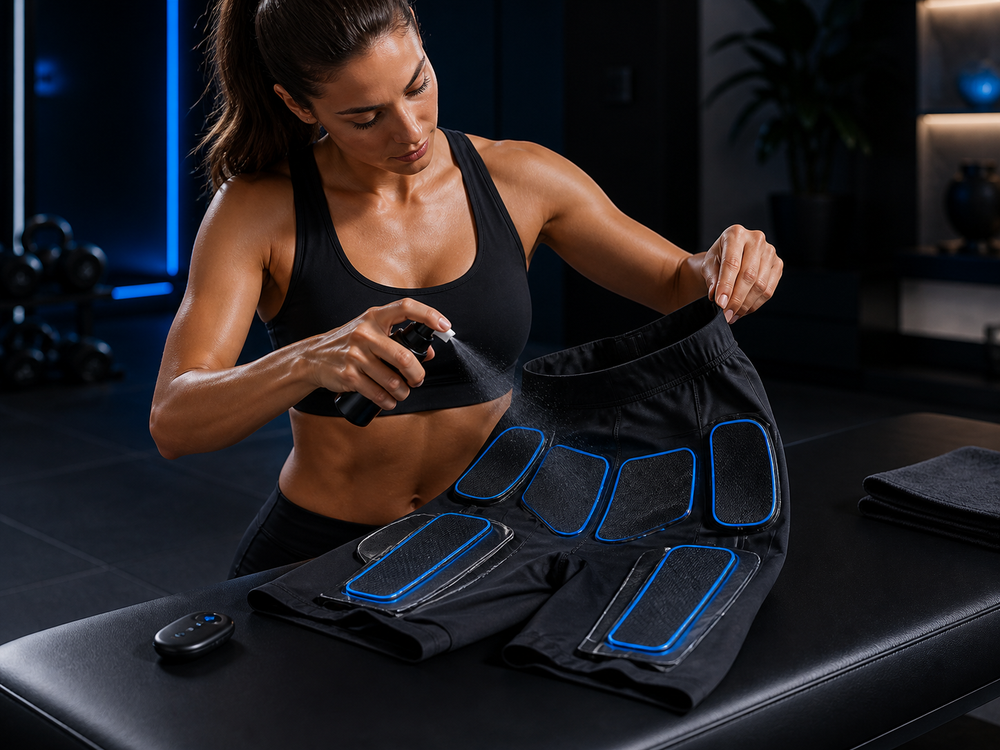
STEP 02
Moisten every electrode with the supplied spray bottle and ensure complete contact with bare skin before powering on.

STEP 03
Select a compatible program, begin at a low intensity and increase gradually until stimulation feels strong but comfortable.
TRAIN YOUR WAY
Choose a compatible training mode and follow guided movements suited to your experience and goals.
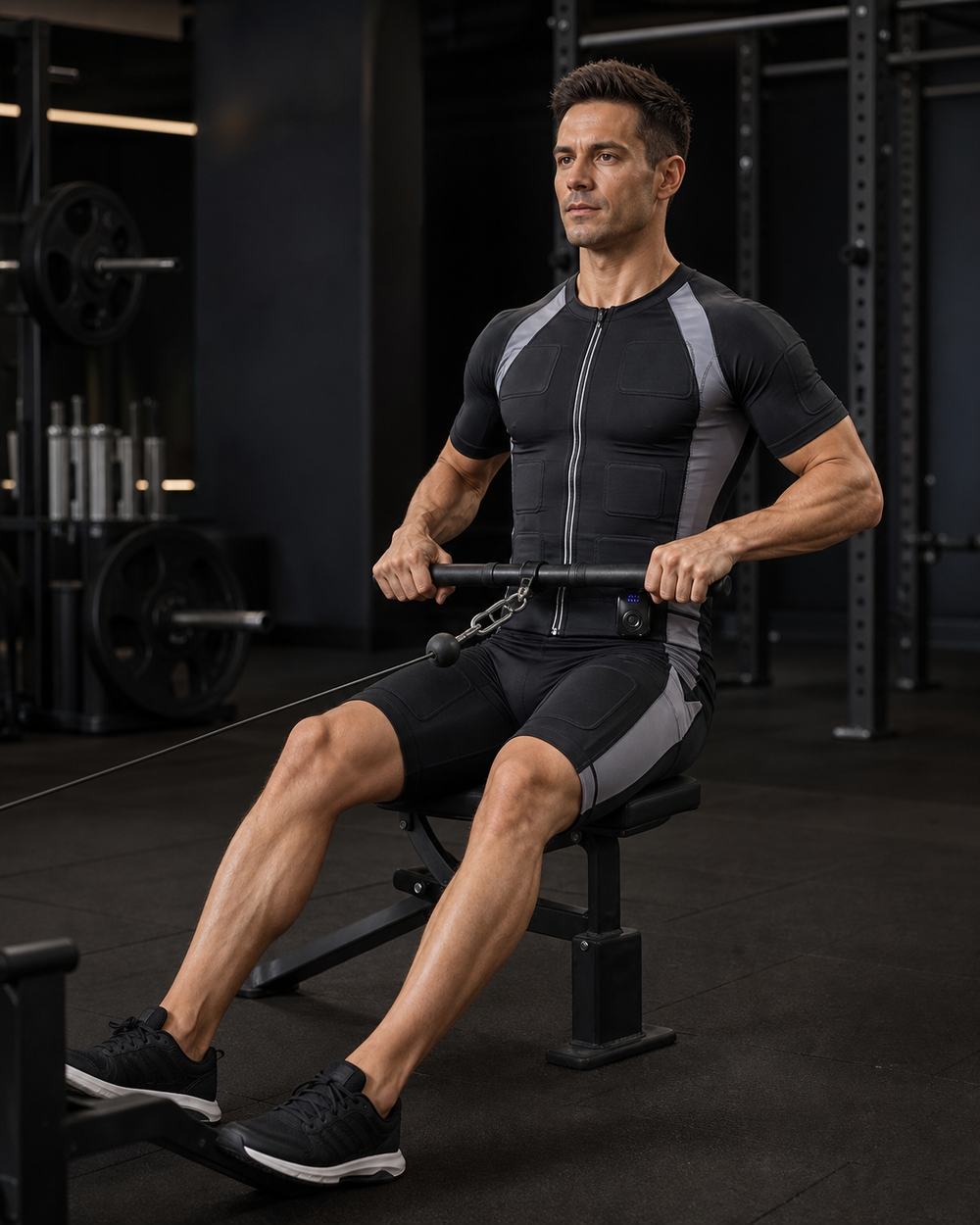
HY · STRENGTH
High-intensity muscle contraction training designed to complement strength and body-conditioning routines.
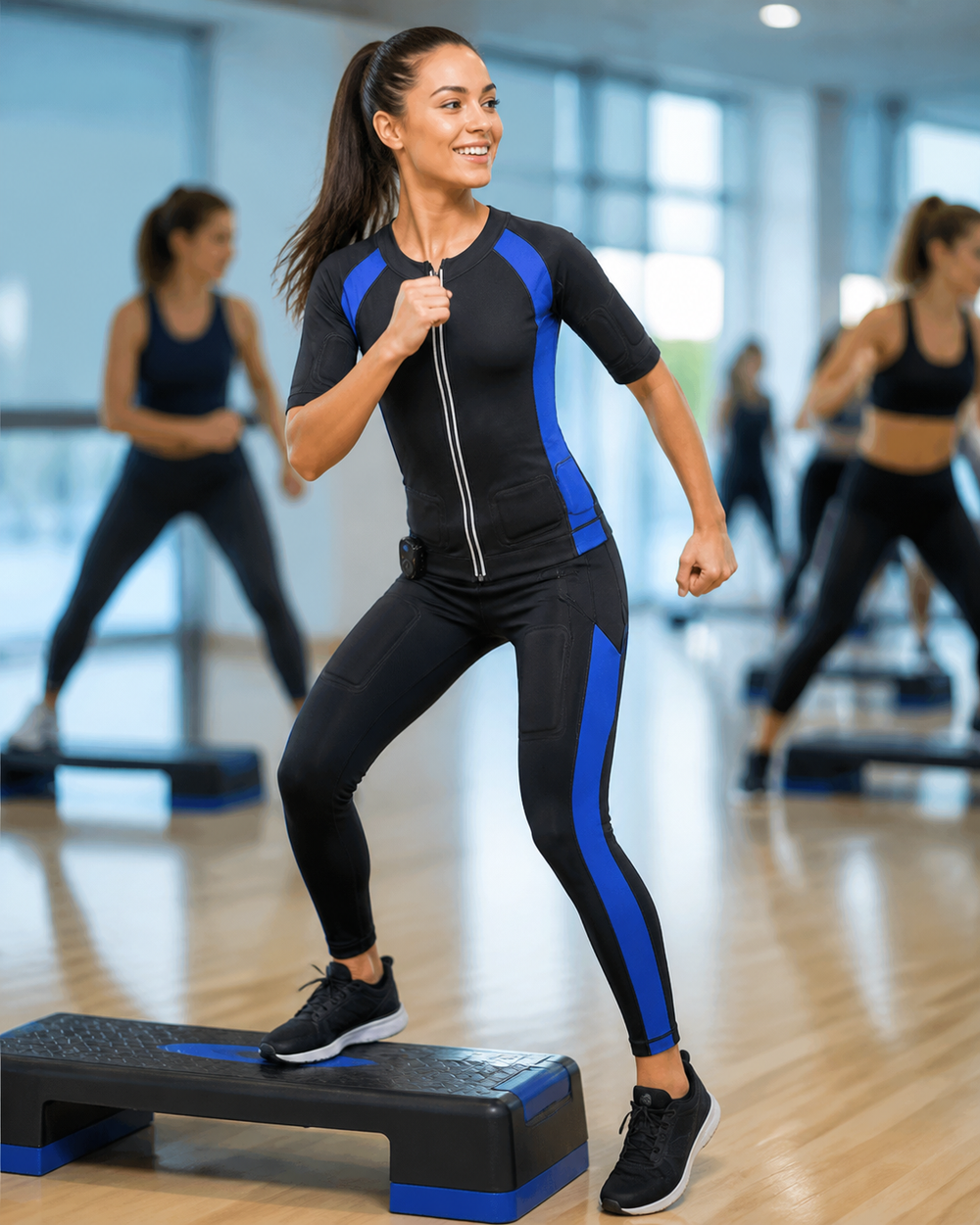
FB · FAT-BURNING
Rhythmic cardio-focused training designed to complement active calorie-burning routines.

YG · YOGA
A gentler rhythm designed to accompany yoga, mobility and controlled breathing exercises.
RC · RECOVERY
A recovery-focused format designed to accompany light movement and relaxation routines.

GUIDANCE BUILT AROUND YOU
From getting started to building your weekly workout plan, your AI Trainer provides instant guidance and personalized EMS training recommendations tailored to your goals and fitness level.

TRAIN SMARTER. LIVE SMARTER.
Powered by advanced conversational AI, the AI-MAX EMS Suit lets you control your workouts with your voice while providing personalized training guidance and everyday assistance.
The keys to proper use are: moistening the electrodes, ensuring they fit snugly against the skin, gradually increasing the intensity, and performing proper exercises during stimulation.
We recommend the following steps:
1. Use the included spray bottle to moisten each electrode before use.
2. Put on the EMS fitness suit, ensuring all electrodes lie flat and are in direct contact with your skin.
3. Start at a low intensity and gradually increase it until you feel distinct muscle contractions while remaining comfortable.
4. Perform exercises such as squats, glute bridges, and leg lifts under the guidance of a professional class or AI personal trainer.
5. Turn off the control unit after training, remove the suit, and clean it according to the care instructions.
6. Stop using the device immediately if you experience significant pain, a burning sensation, dizziness, or unusual discomfort.
Spraying a small amount of clean water on the electrodes improves conductivity between the electrodes and the skin, reduces contact impedance, and allows electrical stimulation to be transmitted more evenly to the target muscles.
Human skin and dry fabric have limited conductivity. When the skin is dry, the weather is cold, or the electrodes do not fit snugly, the following issues may occur:
- The EMS sensation weakens;
- Stimulation intensity varies across different areas;
- A slight stinging sensation occurs in localized spots;
- You need to set the control unit to a higher level to feel the stimulation.
In such cases, you can evenly spray a small amount of clean water onto the electrode surfaces—aiming for a moist state without dripping. The purpose of spraying water is not to increase the current, but to improve contact between the electrodes and the skin. Do not soak the control unit, connectors, or charging port, and do not use liquids containing alcohol, fragrances, salt, or detergents.
Generally, EMS electrodes should be in direct, flat contact with the skin and should not be obstructed by underwear, leggings, or other insulating garments. If fabric comes between the electrodes and the skin, it may result in:
- Significantly reduced stimulation;
- Inconsistent sensations between the left and right sides;
- Concentration of current at a few specific contact points;
- Incorrectly increasing the intensity level in an attempt to feel the stimulation.
When wearing EMS fitness pants, adjust the position of your undergarments according to the clothing's design to ensure that the skin areas covered by the functional electrodes are not obstructed by ordinary fabric, while also maintaining privacy and comfort. Do not place electrodes on skin that is broken, infected, inflamed, swollen, or severely sensitive. Please refer to the specific product instructions for proper wearing methods.
EMS causes target muscles to contract; when combined with regular exercise, appropriate intensity, and consistent training, it can serve as a supplement to muscle training. It is recommended to perform exercises while wearing EMS fitness pants rather than simply sitting still during use.
Suitable exercises include:
- Squats and half-squats;
- Glute bridges;
- Reverse lunges;
- Side leg lifts;
- Hip extensions;
- Low-impact aerobic exercises.
Exercise movements provide joint mobility, coordination, and complete movement patterns, while EMS adds stimulation to the muscle groups covered by the electrodes. The FDA notes that while EMS may help strengthen, firm, or tone muscles to some extent, it cannot replace diet and regular exercise, nor should it be marketed as a standalone method for weight loss or achieving significant changes in physical appearance. FDA: Electronic Muscle Stimulators
The main advantage of EMS fitness is its ability to simultaneously stimulate multiple muscle groups covered by the electrodes and increase the muscle training stimulus within a relatively short workout duration. Potential benefits include:
- Simultaneous training of multiple target muscle groups;
- Enhanced sensation of muscle contraction during low-load movements;
- Reduced reliance on complex equipment;
- Convenience for structured home workouts;
- Adjustable intensity levels and targeted zones;
- Improved awareness of muscle engagement;
- Convenience for those with limited time seeking greater training efficiency.
However, EMS and traditional training are not mutually exclusive. Strength training, cardio, flexibility exercises, nutrition, and rest remain essential. The most sensible approach is to use EMS as a supplementary tool alongside proper form and regular exercise.
Generally, one can start with 10–15 minute low-intensity sessions to acclimate, gradually increasing to about 20 minutes once adapted; specific duration and frequency should be determined based on product instructions, personal comfort, and training intensity.
It is recommended to follow these principles:
- Initial use: Low intensity, short duration;
- Adaptation phase: Avoid consecutive high-intensity sessions;
- Routine training: Prioritize movement quality over simply extending duration;
- Post-high-intensity training: Allow muscles sufficient recovery time;
- If persistent muscle pain, significant weakness, or dark-colored urine occurs, stop immediately and seek medical attention.
For high-intensity whole-body EMS (WB-EMS), international safety guidelines recommend an adaptation period and sufficient recovery time between high-intensity sessions. Intensity and coverage vary among home-use localized EMS products, so always prioritize the specific product instructions. WB-EMS International Safety Guidelines.
Menstruation does not necessarily mean all women must stop exercising; however, the decision to use EMS during this time should be based on individual well-being, product instructions, and the specific area being stimulated.
If feeling well—without significant abdominal pain, dizziness, fatigue, or abnormal bleeding—one may consider using EMS at a lower intensity and shorter duration, while avoiding overly intense stimulation. It is recommended to pause training if any of the following occur:
- Significant menstrual pain or pelvic discomfort;
- Abnormal menstrual flow or marked physical weakness;
- Increased skin sensitivity;
- Currently undergoing treatment for a gynecological condition;
- Discomfort when using electrodes near the abdomen or pelvic area.
Pregnancy and menstruation are different conditions. The safety of EMS use during pregnancy has not been fully established; pregnant women should not use it on their own, particularly not on the abdomen, lower back, or pelvic area. (FDA Powered Muscle Stimulator Guidance)
Individuals with pacemakers or other implanted electronic devices, pregnant women, and those with certain cardiovascular, neurological, or acute medical conditions should not use EMS without a doctor's approval.
Common groups for whom use is contraindicated or requires prior medical consultation include:
- Individuals with pacemakers, defibrillators, or other implanted electronic devices;
- Pregnant women;
- Individuals with epilepsy or severe neurological disorders;
- Individuals with severe heart disease or significant circulatory disorders;
- Individuals with active thrombosis or severe phlebitis;
- Individuals with fever, acute infection, or poor physical health;
- Individuals who have recently undergone surgery or have unhealed wounds;
- Individuals with broken skin, redness, swelling, infection, or severe skin conditions in the area to be stimulated;
- Individuals experiencing unexplained pain, numbness, or muscle weakness.
Target user groups and contraindications may vary by EMS product; always refer to the specific product manual. If you are undergoing medical treatment or are unsure if use is appropriate for you, consult a doctor or physical therapist first. The FDA also notes that EMS may interfere with implanted devices such as pacemakers and defibrillators, and improper use may cause skin irritation, pain, or burns. (FDA EMS Safety Information)
EMS rehabilitation training should be based on a clear diagnosis and professional assessment, with the training program designed by a doctor, physical therapist, or qualified rehabilitation specialist. Common procedures include:
1. Identifying the cause of the injury or functional impairment;
2. Screening for contraindications to EMS;
3. Determining the target muscle groups for training;
4. Starting with low intensity, short duration, and simple movements;
5. Gradually incorporating active muscle contractions and functional movements;
6. Adjusting the regimen based on changes in pain levels, range of motion, and muscle strength;
7. Conducting regular assessments rather than judging effectiveness solely by stimulation intensity.
In medical settings, EMS can be used for muscle re-education, delaying disuse muscle atrophy, improving local circulation, or maintaining range of motion; however, consumer-grade EMS fitness apparel should not be used as a substitute for medical rehabilitation equipment or professional therapy. Patients recovering from surgery or stroke, or those with severe injuries or chronic pain, should use these devices under the guidance of medical professionals. FDA guidelines for medical use.
WESMART focuses on integrating EMS technology with wearable fitness apparel to provide users with a training experience that is convenient, comfortable, and easy to get started with.
According to WESMART brand information, key features include:
- Approximately 15 years of experience in EMS fitness apparel;
- Use of patented flexible dry-electrode technology;
- EMS programs specifically designed for fitness scenarios;
- Emphasis on material and hardware durability (resistance to washing, acids/alkalis, and tearing);
- Zoned electrodes to assist users in targeting specific muscle groups;
- AI personal training services to help new users learn how to wear the gear, adjust intensity levels, and perform exercises;
- Integration of apparel, hardware, training content, and after-sales support into a unified system.
WESMART EMS fitness pants and related products are currently available through the official WESMART website, as well as authorized channels such as Amazon, TikTok Shop, Walmart, offline retail stores, and partner gyms. Sales channels, inventory, and product models may vary by country or region; it is recommended to verify that the store is an official or authorized retailer before purchasing. Before publication, it is advisable to verify claims such as "15 years," "global leader," "patents," and "pioneering AI personal coach," as well as the details regarding various sales channels, ensuring that publicly verifiable evidence exists for each. The more likely the content is to be cited, the more critical it becomes for brand claims to be verifiable; avoid presenting internal marketing slogans directly as unqualified objective facts.
SUPPORT WHEN YOU NEED IT
Choose your WESMART system, scan the supplied QR code and follow guided setup for your first session.